How to Clear a Clogged Drain Like a Pro
By Adam Brandenburg, Co-owner · Marketing & Technology
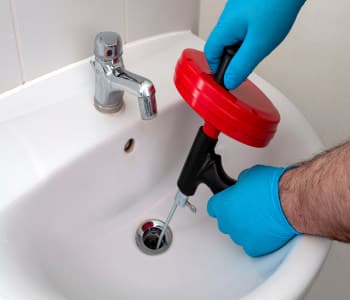
To clear most clogged drains, start with a plunger, then move to a hand snake (also called a drain auger) if the plunger doesn't work. For toilets, use a closet auger instead of a regular snake so you don't scratch the bowl. If more than one drain is backing up, the clog keeps coming back, or a hand snake can't reach it, the problem is probably further down the line, and that's when a plumber's sewer machine, camera, or hydro jetter is the right tool.
What causes clogged drains?
Knowing the usual culprits helps you pick the right fix and prevent the next clog:
- Hair and soap scum in bathroom sinks, tubs, and showers, especially where there's a poor drain screen or none at all.
- Grease and food waste in kitchen drains. Grease hardens as it cools and sticks to the inside of your pipes.
- Things that shouldn't be flushed, like wipes, paper towels, and feminine products. See our list of what not to flush.
- Tree roots in the main sewer line, a common issue around Burnet and the Highland Lakes because of our mature trees.
- Mineral scale from hard water, which narrows older pipes over time.
How can you tell where the clog is?
If a single sink, tub, or toilet is slow, the clog is usually close to that fixture, and it's often something you can clear yourself. If several drains are slow at once, water comes up in the tub when you flush, or you hear gurgling from other drains, the blockage is probably in the main line. That's a job for a plumber.
Step 1: Try a plunger
If the clog is near the surface, a plunger may be able to dislodge it. Use a cup plunger for sinks and tubs and a flange plunger for toilets. On a sink or tub, cover the overflow opening with a wet rag so you get a good seal, then pump up and down vigorously until the water starts to drain.
Do home remedies work?
A few cups of hot tap water can help move soft grease in a kitchen sink, and baking soda and vinegar can freshen a slow drain, but neither will clear a real blockage. Skip boiling water: it can soften PVC drain joints and crack a porcelain toilet bowl. For hair near the opening of a bathroom sink drain, a plastic barbed drain-cleaning strip from the hardware store is an inexpensive way to pull it out.
Should you use a chemical drain cleaner?
We don't recommend them. Store-bought chemical drain cleaners are rarely effective on a real clog, they're hard on pipes, and if they don't work you're left with a sink full of caustic water that's dangerous to plunge or snake.
Step 2: Use a hand snake or closet auger
A plumbing snake is a coiled metal cable that you feed into a drain and turn to break up a clog or hook it so you can pull it out. Hand snakes are flexible enough to get around the tight bends in sink and tub drains. A closet auger is made specifically for toilets, with a protective sleeve that keeps the cable from scratching the porcelain.
You can buy both at most hardware stores. A slim cable works best for hair in bathroom drains; a heavier-duty cable handles tougher kitchen clogs.
How to use a plumbing snake, step by step
- Remove the drain stopper or strainer and pull out any debris you can reach.
- Feed the end of the cable into the drain and push it in until you feel resistance.
- Turn the handle to rotate the cable. It will either break up the clog or grab onto it.
- Keep rotating and working the cable back and forth until it moves freely, then pull it out slowly, wiping it off as it comes.
- Run water down the drain, or flush the toilet, to make sure everything is clear.
Safety tips
- Wear gloves and eye protection. What comes out of a drain isn't clean.
- Don't force the cable. If it won't go any further, you may be at a bend or at the clog, and forcing it can damage the pipe or kink the cable.
- If you're using a powered snake, check the cord for damage first and unplug it when you're done.
We don't recommend renting a large sewer machine to tackle a main line yourself. They're powerful, dangerous pieces of equipment that can cause serious injuries, and they should be run by a licensed plumber.
Step 3: Know when to call a plumber
If the clog keeps coming back, more than one drain is affected, or a hand snake can't reach it, the blockage is likely deeper in your system. Here's what a plumber brings to the job.
Sewer machine (power auger)
A motorized cable machine for stubborn blockages deeper in your plumbing, including tree roots, grease, and solid debris lodged in the main sewer line.
Camera inspection
A camera shows exactly where the problem is and what's causing it, whether that's cracks, a sagging section of pipe, roots, or buildup. It's often used after a line is cleared to confirm it's fully open. Learn more about video inspections.
Hydro jetting
High-pressure water scours grease, sludge, and scale off the inside of the pipe and can clear roots and debris that a cable machine leaves behind, restoring the pipe's full diameter. It's especially useful where hard-water scale has narrowed older lines.
How can you keep your drains from clogging?
- Use drain screens in showers and tubs to catch hair.
- Keep grease, coffee grounds, and food scraps out of the kitchen sink.
- Only flush toilet paper.
- If the same line clogs again and again, have it inspected instead of just cleared.
If you're stuck, our drain cleaning team can clear the clog and tell you why it happened.