Is Now the Time to Replace Your Old Water Heater?
By Adam Brandenburg, Co-owner · Marketing & Technology
It's probably time to replace your water heater if the tank is leaking, it's making rumbling or popping noises, you're getting rusty hot water, or it can't keep up the way it used to, especially if it's more than about 8 to 12 years old. Our hard water tends to push tanks toward the shorter end of that range. If it's younger and the problem is a single part, like a heating element or thermostat, a repair often makes more sense.
What are the signs your water heater is about to fail?
- It's getting old. Most tank water heaters last roughly 8 to 12 years, and hard water tends to shorten that.
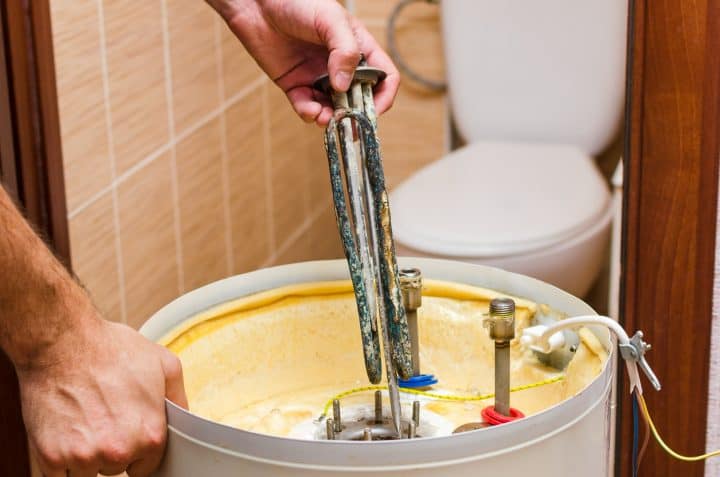
- It's making strange noises. Rumbling or popping usually means sediment has built up in the bottom of the tank.
- It's leaking. Water coming from the tank itself is a clear sign it's time for a replacement.
- It isn't keeping up. If it doesn't provide the same hot water it used to, it may be near the end of its life.
- Your hot water is rusty or discolored, which can mean the inside of the tank is corroding.
How much does it cost to replace a water heater?
The cost depends on the size and type of water heater you choose, whether it runs on gas or electricity, and what current code requires for your installation. We walk through each of those with you and give you a transparent upfront quote before any work begins.
As a water heater gets older, it becomes less efficient and costs more to operate, and a new one comes with updated safety features. If you're considering a replacement, have a licensed plumber give you an accurate quote for your specific home.
What type of water heater should you choose?
There are three main options:
- Tank water heaters store hot water and keep it ready. They cost the least up front, but you can run out of hot water during heavy use.
- Tankless water heaters heat water as it passes through the unit, so you don't run out. They cost more to install and need regular descaling in hard water. See should you buy a tankless water heater?
- Hybrid (heat pump) water heaters are tank heaters that use a heat pump to heat water with much less electricity than a standard electric tank. Learn more about hybrid water heaters.
Watch: how to choose your water heater
Choosing a water heater means sorting through fuel types, sizes, and safety and ease-of-use features. In this video, Lucas Brandenburg, one of our owners, walks through what's important and what to consider.
What are the best brands for water heaters?
When it comes to replacing your water heater, the brand matters. You want a reliable, efficient unit that will last for years, and several brands do both well.
Two of the most popular brands are Rheem and A.O. Smith. Both offer a variety of water heaters, including ENERGY STAR-certified models with high efficiency ratings. Rheem also makes Marathon water heaters, which are built with non-metallic tanks so they won't rust the way steel tanks can.
Whichever brand you choose, compare the specs, including the warranty and which size best suits your household, so you get the right fit for your home.
What does installing a new water heater involve?
A straightforward replacement usually doesn't require moving pipes around, but there's more to it than connecting a new tank. The installer needs to match the fuel type and size to your home, make sure the gas venting or electrical supply is right for the new unit, and bring the installation up to current code, which can mean adding a drain pan, a thermal expansion tank, or updated venting your old installation didn't have. Your city may also require a permit.
Because gas, venting, and electrical mistakes can be dangerous, we recommend having a licensed plumber handle the installation. Our water heater team takes care of the whole job, including disposing of your old unit.
What are the efficiency ratings for new water heaters?
The older your water heater is, the less efficient it will be and the more it costs to operate. For new residential water heaters, look at the Uniform Energy Factor (UEF), which replaced the older Energy Factor (EF) rating. UEF compares the energy a water heater uses to the hot water it delivers. The higher the number, the more efficient the water heater, which is good news for your wallet.