Troubleshooting Your Leaking Shower Head
By Adam Brandenburg, Co-owner · Marketing & Technology
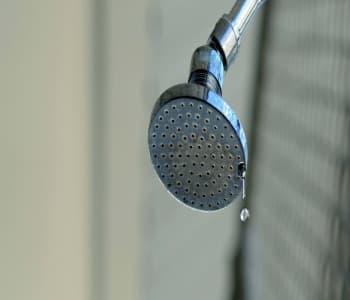
If your shower head keeps dripping long after you turn the water off, the problem is usually inside the shower valve behind the handle (a worn cartridge or washer), not the shower head itself. A few drips right after you shut it off are normal while the head drains. If water sprays or leaks where the shower head screws onto the pipe, the fix is usually a new washer or O-ring, or fresh thread seal tape. Mineral scale from hard water can also cause leaks and a messy spray.
What causes a shower head to leak?
There are a few things that can cause your shower head to leak. The washers may be old and need replacing, or the O-rings may have deteriorated. The shower head might not be installed properly, it could be cracked, or your water pressure could be too high.
If you think it's one of these issues, you can often fix it yourself. Replacing washers or O-rings is a pretty simple task, and you can usually find instructions on the manufacturer's website. If it's something like a cracked shower head, replacing the head is the fix.
And if you think the water pressure might be the problem, it can be lowered at your home's pressure-reducing valve. See why high water pressure causes expensive problems.
Why does my shower drip after the water is off?
A steady drip long after you turn the shower off usually means water is getting past the shower valve. In most newer single-handle showers, that means a worn cartridge. In older two-handle showers, it's often a worn washer or valve seat. That repair happens at the valve behind the handle, and it usually means shutting off the water to the house first.
How do you fix a leak at the shower head?
Leaks at the shower head itself usually come from one of two things: a buildup of limescale or a worn washer.
Removing limescale is a relatively easy process. Soak the shower head in white vinegar (or use a descaling product) for a few hours, then scrub away any remaining scale with an old toothbrush. Replacing a washer or O-ring is just as simple: unscrew the shower head, swap the worn part, and screw it back on.
What types of seals and washers are in a shower head?
The O-ring is the most common type of seal, usually made of rubber or silicone. It sits at the connection where the shower head meets the pipe and creates a watertight seal. If it's worn out, it can leak.
A gasket is a ring-shaped piece of rubber or plastic that sits between the shower head and the pipe. It helps keep water from leaking out around the threads. If your shower head leaks at the connection, the gasket may be damaged or missing.
The washer is a small, round piece of rubber or plastic that sits in the bottom of the shower head housing and seals the housing to the pipe. If it's damaged or missing, the shower head can leak.
How do you replace a shower head?
If cleaning the shower head doesn't fix the issue, you might need to replace it. Fortunately, replacing a shower head is fairly easy and only takes a few basic tools.
With the shower turned off, unscrew the old shower head with a wrench or pliers, depending on its shape. Wrap the threads on the shower arm with a few turns of thread seal tape (Teflon tape), attach the new shower head, and turn the water back on to check for leaks.
If you're having trouble loosening the old shower head, don't force it. Wrap a cloth around it to protect the finish, and try a drop of penetrating lubricant such as WD-40 to help loosen stuck threads.
What if the shower head is loose or the spray is uneven?
If your shower head is loose on the pipe, remove it, wrap the threads with a few layers of thread seal tape so they're completely covered, and screw it back on snugly.
If limescale is clogging the holes in the shower head and blocking the flow, soak it in vinegar for a few hours, then scrub the nozzles with an old toothbrush. With our hard water, this is a common problem.
What should you do if the problem persists?
If your shower head is still leaking after all of the steps above, it's time to take a deeper look. The parts most likely to be faulty are the washers and O-rings. They create the seal between the shower head and the pipe, and if they've become warped, cracked, or discolored over time, they're probably the culprits.
If the drip is coming from the valve, or you'd just rather not tackle it yourself, our bathroom plumbing team can diagnose and fix the issue quickly.