What Does an AC Tune-Up Include, and Is It Worth It?
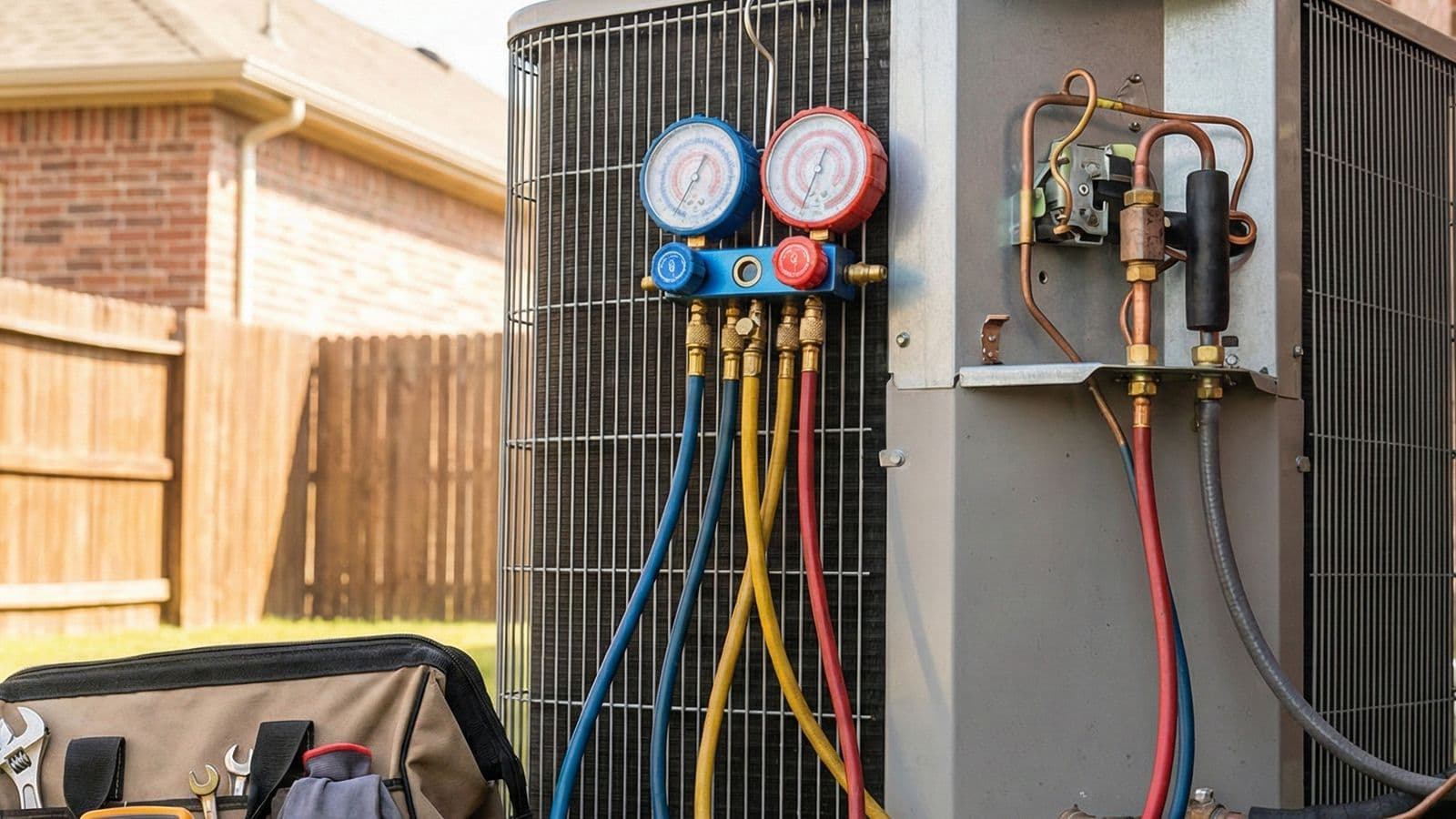
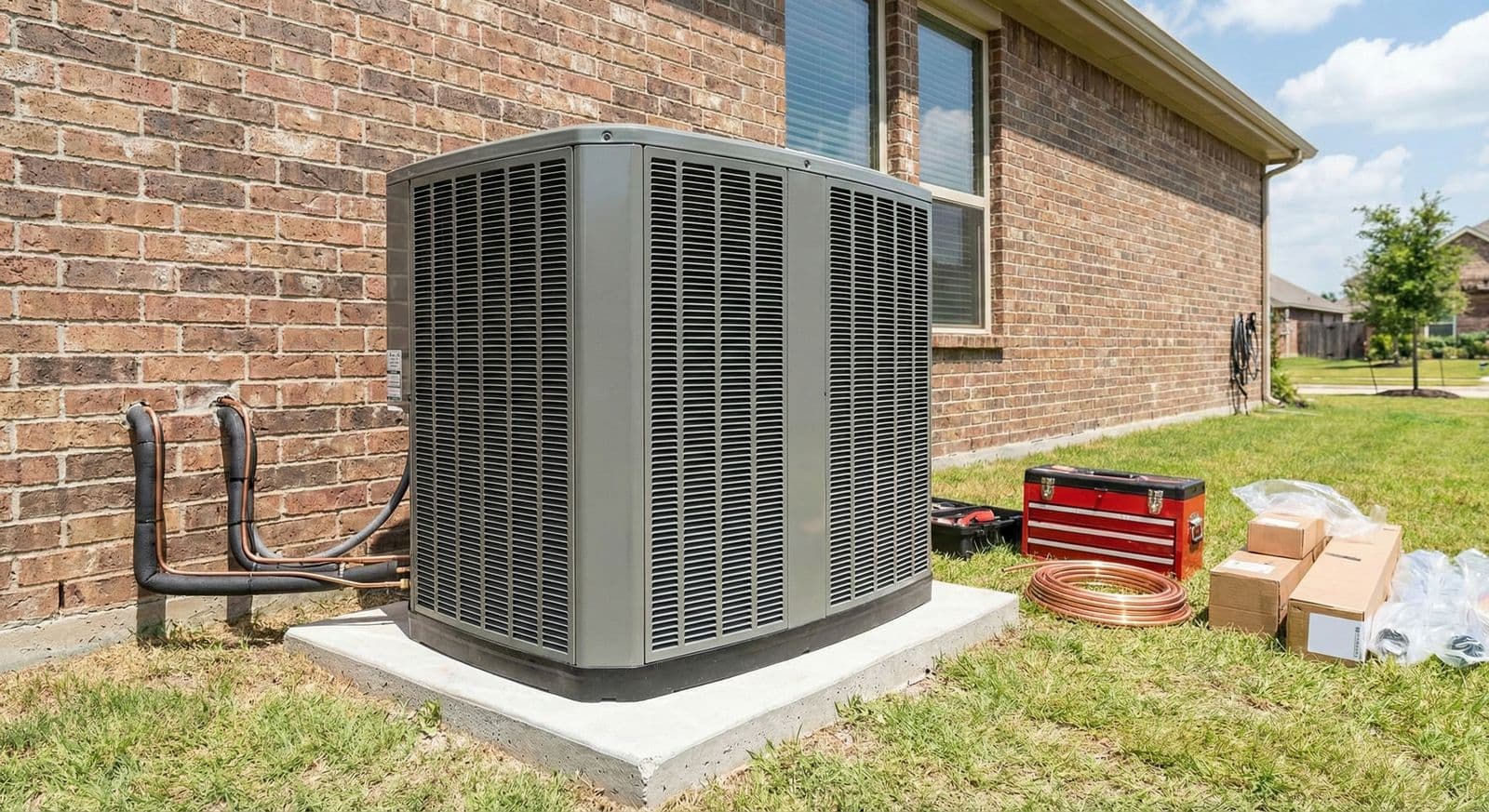
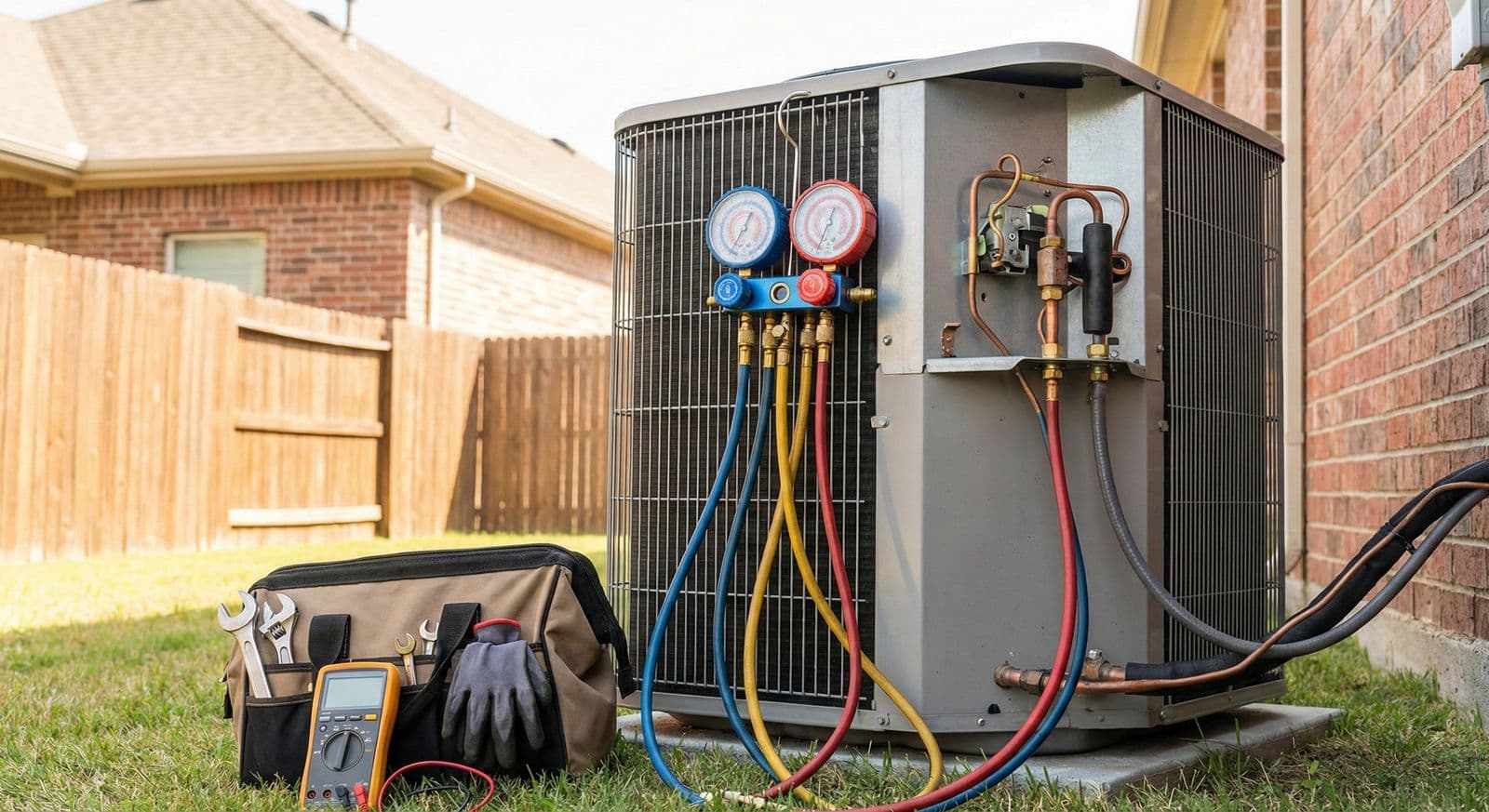
An AC tune-up is a checkup and cleaning for your cooling system. A technician cleans the outdoor coil, tests electrical parts like capacitors and contactors, checks refrigerant pressures and how much current the motors draw, clears the condensate drain, and confirms the system is cooling the air the way it should. In Central Texas, where the AC carries your home through a long, hot summer, it's worth doing every spring, mainly because it catches small problems, like a weak capacitor or a slow drain, before they turn into a no-cooling call in the middle of July.
What's included in an AC tune-up?
Every company's checklist is a little different. Here's exactly what our technicians check on a cooling tune-up.
At the outdoor unit
- Rinse the outdoor coil
- Remove the fan motor and clear leaves and debris from inside the unit
- Check the amp draw on the outdoor unit and compressor
- Inspect the contactors
Inside and throughout the system
- Test all system capacitors
- Check the temperature difference between the air going into the system and the air coming out
- Check refrigerant pressures
- Check the amp draw on the indoor blower motor
- Check all safety switches
- Clear the drain lines
- Visually inspect the ductwork
- Check the thermostat's function and calibration
- Replace your air filter (using a filter you supply)
On the fall heating visit
For heating, we also test the heat strips, verify the defrost control board on heat pumps (in heating mode, when it's under 70°F outside), and check the amp draw on the flue exhaust motor on gas systems.
Why do those checks matter?
Capacitors and contactors
Capacitors give the compressor and fan motors the boost they need to start and keep running. They weaken with age and heat, and a failed capacitor is a common reason an AC quits on a hot day. The contactor is the switch that turns the outdoor unit on and off, and worn contacts can keep it from starting. Both are small parts that are much easier to replace on your schedule than in an emergency.
Clean coils
The outdoor coil gets rid of the heat your AC removes from the house. When it's dirty, the system has to run longer and work harder to do the same job.
Amp draw and refrigerant pressures
Measuring how much current each motor draws shows whether it's straining. Refrigerant pressures, together with the temperature difference across the indoor coil, show whether the system is charged and working correctly. Low refrigerant always means a leak somewhere, and finding it early is better than finding it when the system stops cooling.
Drain lines
Your AC removes a lot of water from humid air. If the drain line clogs, a safety switch may shut the system down, or the drain pan can overflow, which is a real risk when the air handler sits in the attic above a ceiling.
Is an AC tune-up worth it?
We'll be straight with you: a tune-up won't make an old system new, and it won't prevent every breakdown. What it does is catch the wear you can't see, like a weakening capacitor, a motor pulling too much current, a slow refrigerant leak, or a drain starting to clog, while the fix is still small and you can schedule it, instead of finding out on a 100-degree afternoon.
It also keeps your system running closer to the way it was designed to, which helps with comfort and efficiency through a long cooling season. And some equipment warranties require regular professional maintenance, so it's worth checking what yours says.
When should you schedule a tune-up?
For air conditioning, spring is best: before the first really hot stretch, when a problem is an inconvenience instead of an emergency and scheduling is easier. For heating, schedule in the fall before the first cold snap. If you have a heat pump, it's working year-round, so both visits matter.
What can you do between tune-ups?
- Check your air filter monthly and replace it at least every 60 to 90 days.
- Keep grass, shrubs, and debris cleared away from the outdoor unit.
- After mowing, gently rinse clippings off the outdoor coil with a garden hose, with the power off at the disconnect first.
- Pay attention to new noises, smells, or water around the indoor unit, and call before a small issue grows. If your system is already struggling, see why your AC might be running but not cooling.
Tune-ups with a Brandenburg membership
Our membership includes a spring cooling tune-up and a fall heating tune-up every year, along with a whole-home plumbing, heating, and air inspection and a tank water heater flush. If your system is already acting up, schedule an AC repair visit, and for heating problems, see our heating repair service.