Why Is My AC Running but Not Cooling?
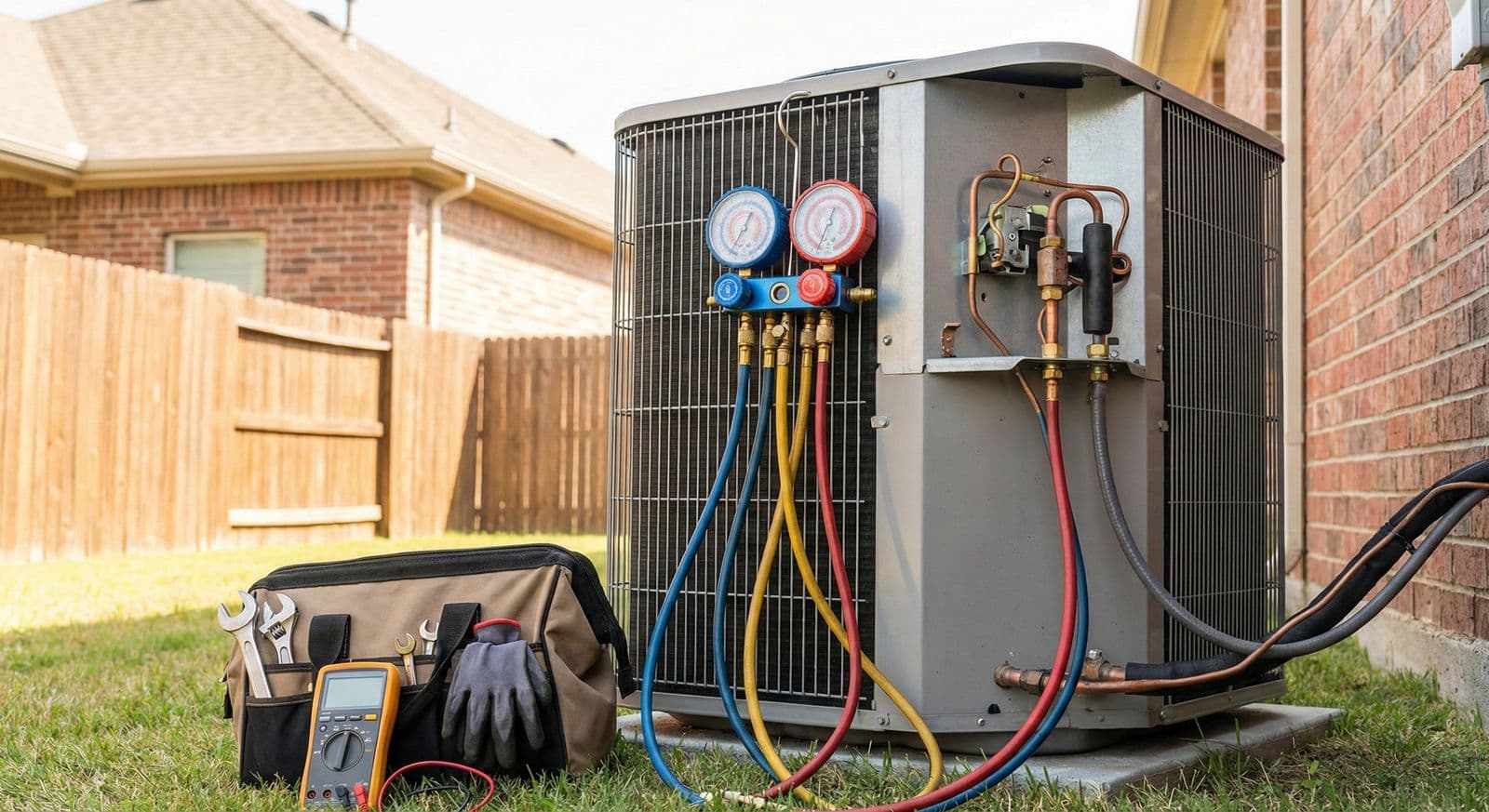
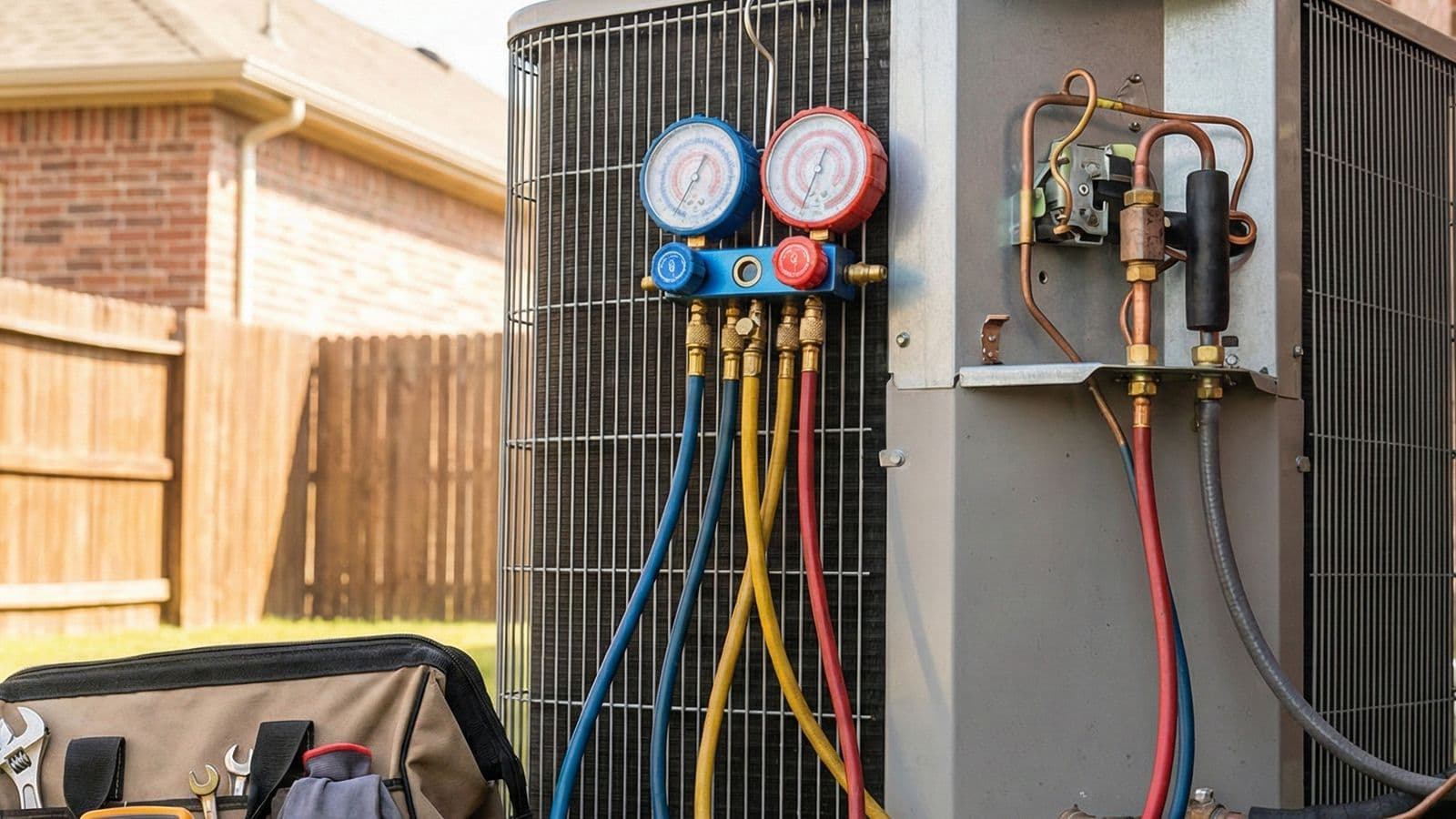
When your AC runs but doesn't cool, the most common causes are a thermostat setting, a clogged air filter, a tripped breaker that has shut off the outdoor unit, a frozen indoor coil, a clogged condensate drain, or a dirty outdoor coil. You can check all of those yourself in a few minutes. If none of them is the problem, it's likely something that needs a technician, such as low refrigerant from a leak, a failed capacitor, or a compressor problem.
This is one of the most common calls we get during a Central Texas summer. Before you call, here's what to check, in order.
1. Check the thermostat
- Make sure it's set to Cool and that the set temperature is below the current indoor temperature.
- Set the fan to Auto, not On. With the fan on, the blower keeps running even when the system isn't cooling, which pushes room-temperature air through the vents and can make it feel like the AC isn't working.
- If the display is blank or dim, replace the batteries.
2. Check the air filter
A clogged filter chokes off airflow. The system keeps running, but very little cool air reaches your rooms, and restricted airflow can eventually freeze the indoor coil. Check your filter every month and replace it at least every 60 to 90 days, or more often if you have pets or allergies.
3. Make sure the outdoor unit is running
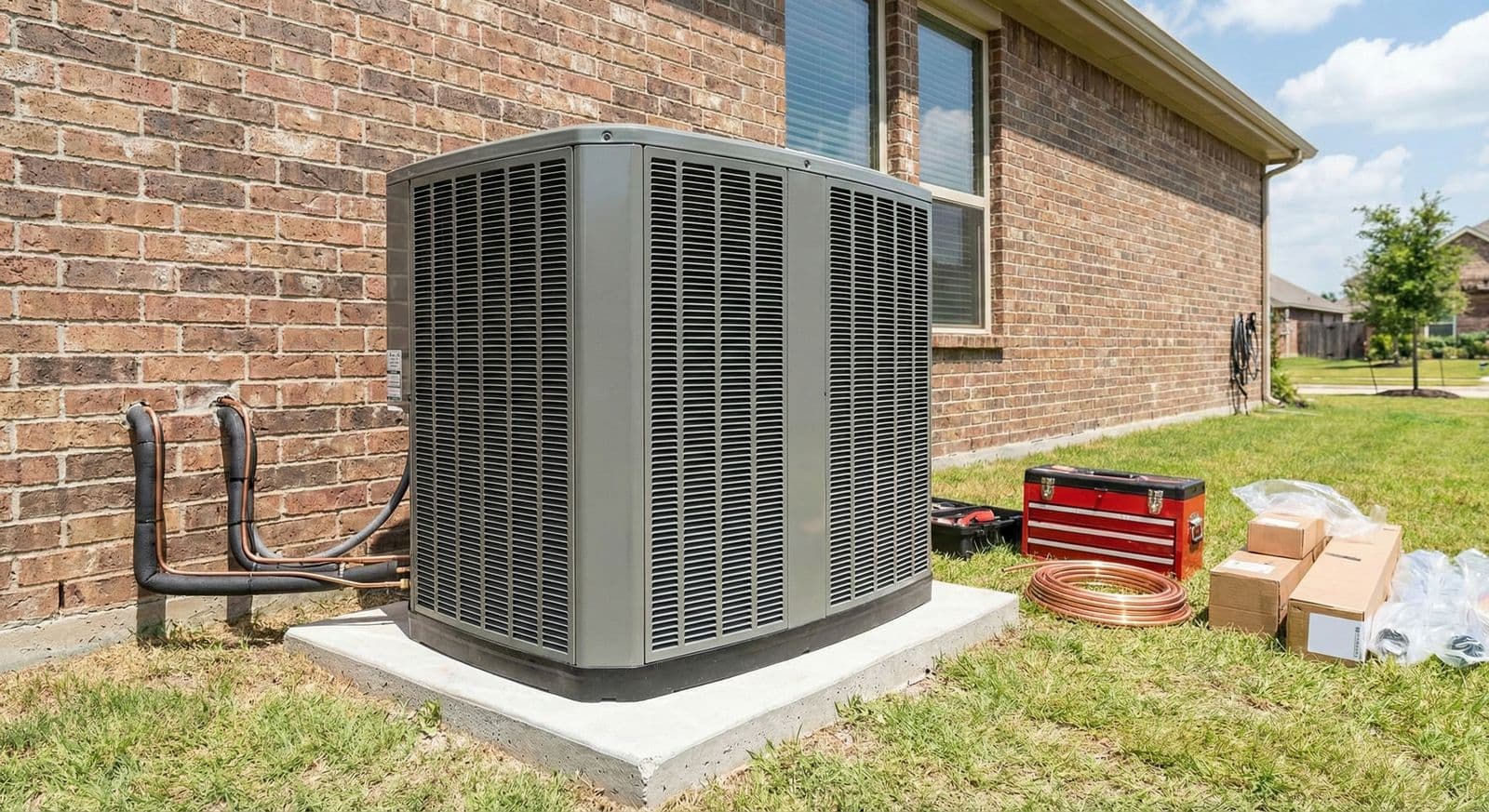
Go outside while the system is calling for cooling. You should hear the outdoor unit running and see the fan on top spinning. If the indoor blower is running but the outdoor unit is silent:
- Check your electrical panel for a tripped breaker labeled AC, condenser, or something similar, and reset it once.
- Check the disconnect box on the wall near the outdoor unit to make sure it hasn't been pulled or switched off.
- If the breaker trips again, leave it off and call us. Something is causing it to trip.
If the outdoor unit hums but the fan doesn't spin, turn the system off at the thermostat and call. That often points to a failed capacitor or fan motor. Don't try to start the fan by hand or open the unit: capacitors can hold a dangerous electrical charge even with the power off.
4. Look for ice
Check the larger, insulated copper line running to the outdoor unit and, if you can see it, the indoor coil at your air handler. Ice on either one means the coil has frozen, usually from poor airflow (often a dirty filter) or low refrigerant.
To thaw it, set the thermostat to Off and the fan to On for a few hours, and replace the filter if it's dirty. Watch for extra water as the ice melts. If the coil freezes again once you turn the cooling back on, the system needs a technician.
5. Check the condensate drain
Your AC pulls a lot of moisture out of the air, and that water drains away through a small pipe. When the drain line clogs, many systems have a safety float switch that shuts off cooling to keep the drain pan from overflowing, so the cooling stops even though the system seems to be on. If your air handler is in the attic, a clogged drain can also show up as water stains on the ceiling.
If you can find where the drain line ends outside, a wet/dry vacuum on the end can often pull the clog out. If the pan is full of water or you see any water damage, give us a call.
6. Rinse the outdoor coil
The outdoor coil gets rid of the heat your system pulls out of the house. When it's caked with dust, grass clippings, or leaves, it can't do that well, and the system struggles on hot days. Turn the power off at the outdoor disconnect, then gently rinse the coil with a garden hose. Don't use a pressure washer, which can bend the thin metal fins. Keep plants and debris cleared back from the unit.
What if some rooms cool and others don't?
If the system is cooling but certain rooms stay warm, the problem may be in your ductwork rather than the AC. Leaky or poorly insulated ducts in a hot attic can lose a lot of cool air before it reaches your rooms. Our ductwork team can test and seal them.
When should you call an AC technician?
Call us if you've worked through these checks and the air still isn't cold, or if you notice any of these:
- A breaker that trips again after you reset it
- An outdoor unit that hums, clicks, or buzzes but won't start
- Ice that comes back after thawing
- Hissing or bubbling sounds, which can mean a refrigerant leak
- Water around the indoor unit or on the ceiling
- A burning smell, or grinding or screeching noises
One thing to know about refrigerant: an air conditioner doesn't use it up. If a system is low, it has a leak, and adding refrigerant without finding the leak only buys time.
On the hottest afternoons of a Central Texas summer, even a healthy system may run nonstop and fall a few degrees behind the thermostat. But if it's blowing warm air, or falling further behind every day, it's time for a professional look. Our AC repair team keeps common parts on our trucks so we can fix most problems on the first visit. If your system is older and the repair is a big one, see should you repair or replace your AC?
How can you prevent this next summer?
Many of the problems above, like dirty coils, weak capacitors, and slow drains, can be caught during a spring tune-up before they leave you without cooling. Our membership includes a spring cooling tune-up and a fall heating tune-up every year. Here's what an AC tune-up includes.