Heat Pump or Gas Furnace: Which Is Better for a Hill Country Home?
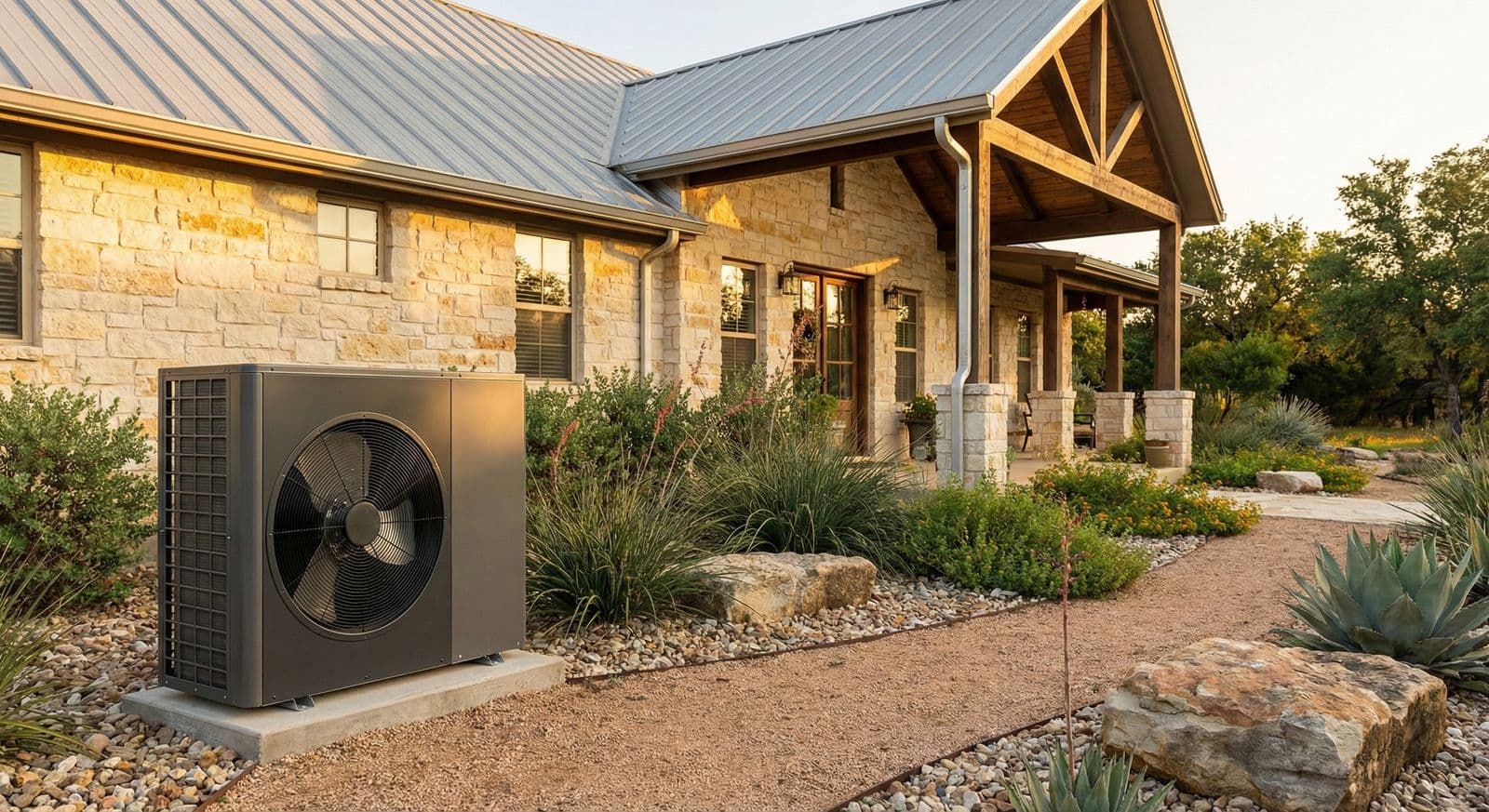
For most Hill Country homes, a heat pump is the better fit. Our winters are mild most of the time, which is when heat pumps heat most efficiently, and the same system cools your home all summer. A gas furnace, or a "dual-fuel" system that pairs a heat pump with a furnace, makes more sense if you already have natural gas at the house, want the strongest possible heat during the occasional hard freeze, or have a home that loses a lot of heat. If there's no natural gas line to your home, a heat pump is usually the simplest choice.
How does a heat pump heat your home?
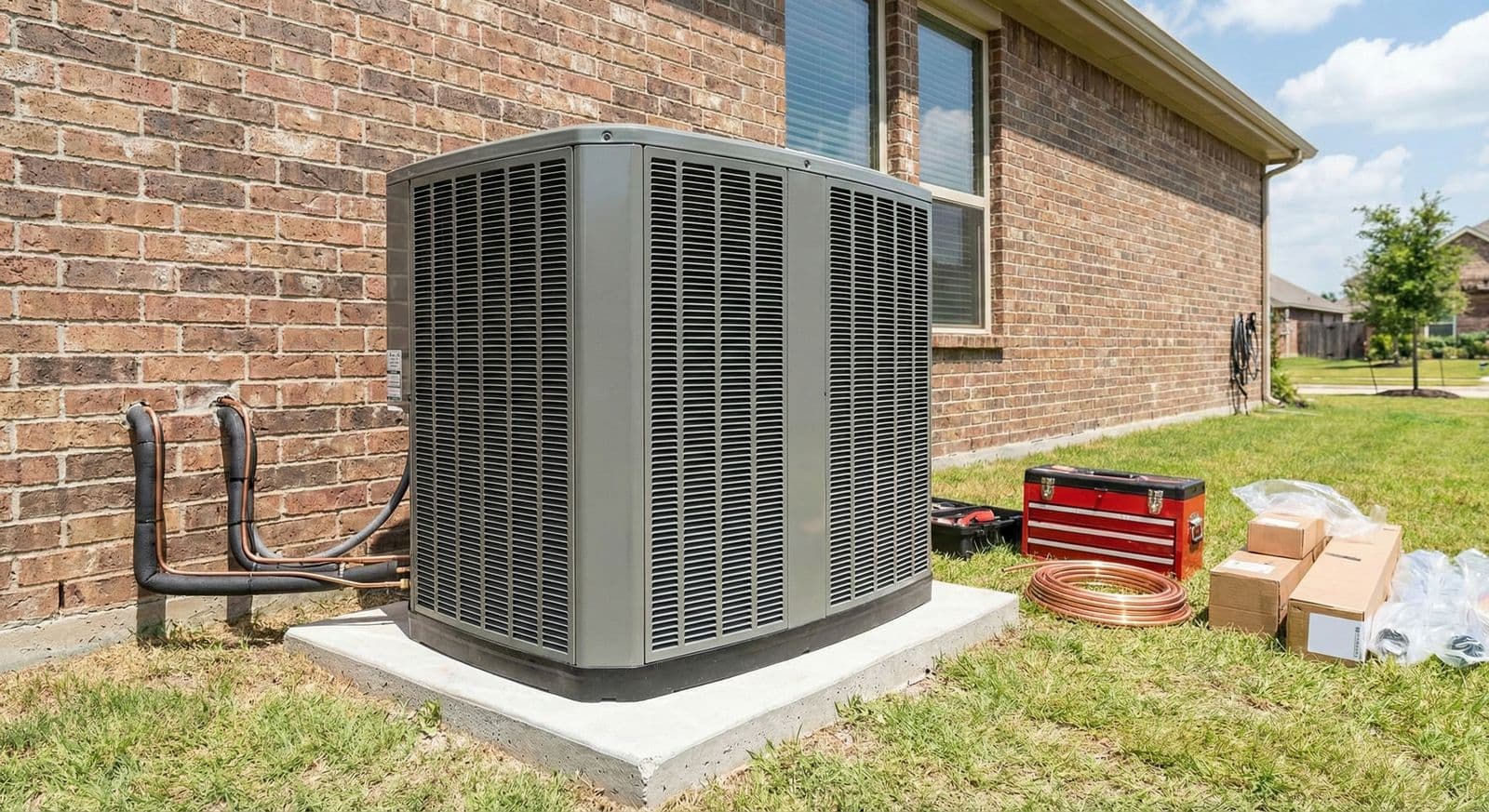
A heat pump works like an air conditioner that can run in reverse. In summer, it moves heat out of your house. In winter, it pulls heat from the outdoor air (even cold air holds some) and moves it inside. Because it moves heat instead of making it, a heat pump can deliver more heat energy than the electricity it uses.
As the temperature outside drops, a heat pump has to work harder and puts out less heat. Most systems here include electric backup heat, called heat strips, in the indoor unit. They kick in when the heat pump can't keep up on its own. Backup heat works fine, but it costs more to run than the heat pump itself.
Heat pump efficiency is rated in HSPF2 for heating and SEER2 for cooling. Since January 1, 2023, new split-system heat pumps have had to meet at least 7.5 HSPF2 and 14.3 SEER2.
How does a gas furnace heat your home?
A gas furnace burns natural gas or propane to heat air, then blows that air through your ducts. It puts out strong, hot air no matter how cold it is outside. A furnace only heats, so it's paired with a separate air conditioner for cooling.
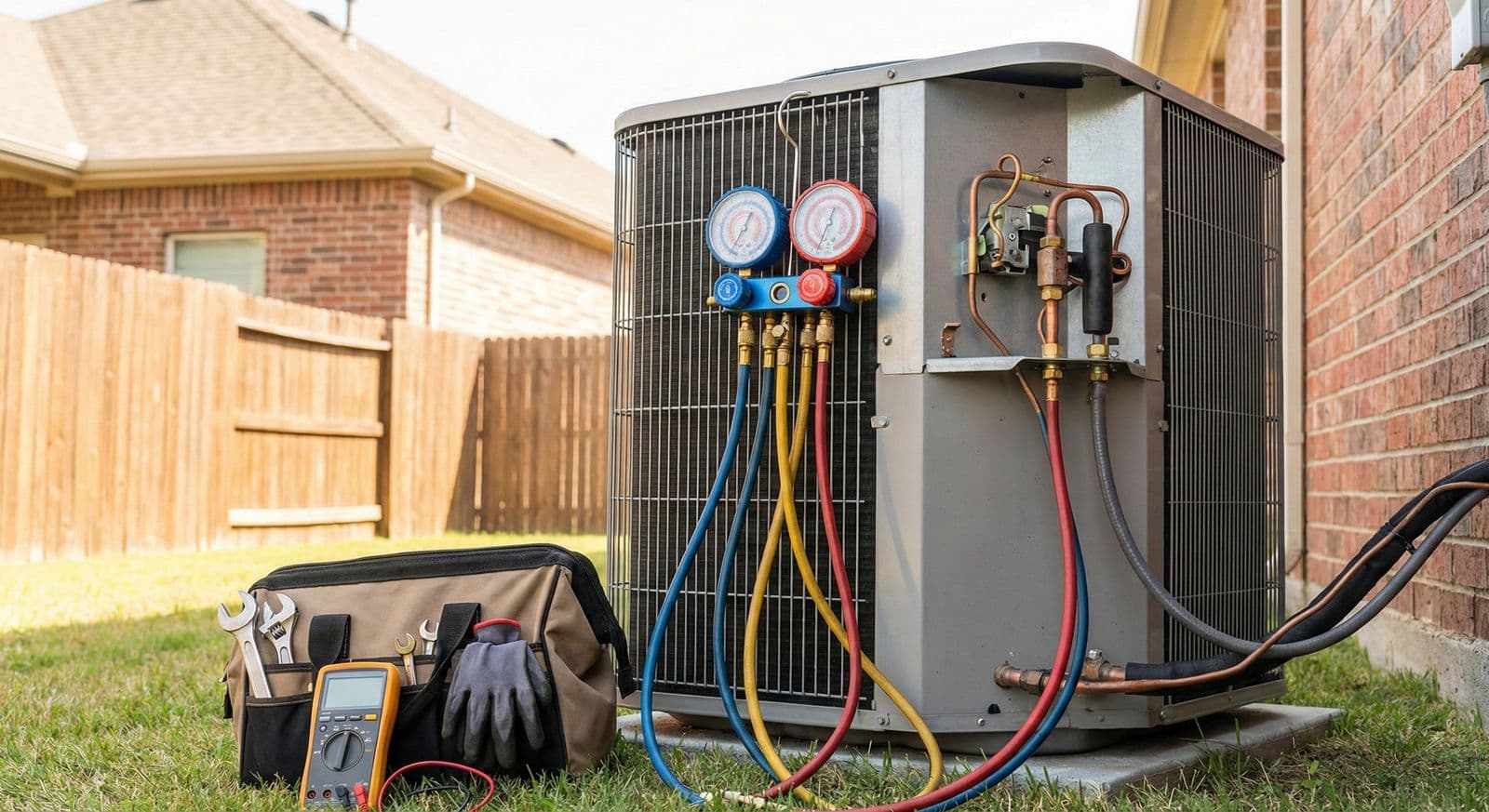
Furnace efficiency is rated by AFUE, the percentage of the fuel's energy that ends up as heat in your home. Because a furnace burns fuel inside your house, it needs proper venting, a correctly sized gas line, and yearly safety checks, and every home with gas appliances should have working carbon monoxide alarms.
What do Hill Country winters mean for your choice?
Most of our heating season is mild, with plenty of days when a heat pump can heat the house efficiently. But we do get hard freezes, as February 2021 reminded everyone in Texas. During a deep cold snap, a heat pump leans more heavily on its backup heat strips, which raises your electric bill for those days. A gas furnace keeps putting out the same strong heat.
Deep cold snaps are usually short here, which is why heat pumps work well for so many Central Texas homes. If your home is drafty or poorly insulated, or you simply want the warmest possible air on the coldest nights, a furnace or a dual-fuel setup is worth a look.
Do you have natural gas at the house?
This is often the deciding factor. Not every home here has natural gas service, and many rural and lake-lot properties in the Hill Country don't. Without a gas line, a furnace means running on propane, which means a tank on your property and scheduled deliveries. For those homes, an all-electric heat pump is usually simpler.
If you already have gas and a furnace in good shape, that changes the math. You may be able to keep the furnace and add a heat pump.
What is a dual-fuel system?
A dual-fuel system pairs an electric heat pump with a gas furnace. The heat pump handles cooling all summer and heating on mild winter days, and the system switches over to the furnace when the outdoor temperature drops below a set point. You get the heat pump's efficiency most of the year and the furnace's strong heat in a hard freeze. It's a good option if you have gas service and your furnace still has life in it.
Heat pump vs. gas furnace at a glance
| Heat pump | Gas furnace | |
|---|---|---|
| Cooling | Yes, the same system cools in summer | No, needs a separate air conditioner |
| Heating on mild days | Very efficient | Strong, steady heat |
| Heating in a hard freeze | Leans on backup heat strips | Strong heat at any outdoor temperature |
| Fuel | Electricity only | Natural gas or propane, plus electricity for the blower |
| Safety | No combustion in the home | Needs proper venting and carbon monoxide alarms |
What else should you consider?
- The age of your equipment. If your AC and furnace are both near the end of their lives, it's a natural time to consider switching to a heat pump. If one is much newer, it may make sense to replace only the other.
- Your ductwork. Both systems depend on good ducts. Leaky or undersized ducts in a hot attic hurt comfort and efficiency either way.
- Your electrical service. Backup heat strips draw a lot of power, so it's worth confirming your electrical panel can handle them.
- How well your home holds heat. Insulation, windows, and air sealing affect how hard any system has to work and what size you need.
How we help you choose
We'll look at your home, your current equipment, your ductwork, and whether you have gas service, then walk you through the options with upfront pricing. Learn more about our heat pump services and heating installation, or if your current system has stopped working, start with heating repair. Our AC replacement cost guide also covers what changes the price when you choose a heat pump instead of a straight AC.